------------------------------------------------------------------------------------------------------------------------------

Latest Articles


Showing posts with label Cameras. Show all posts


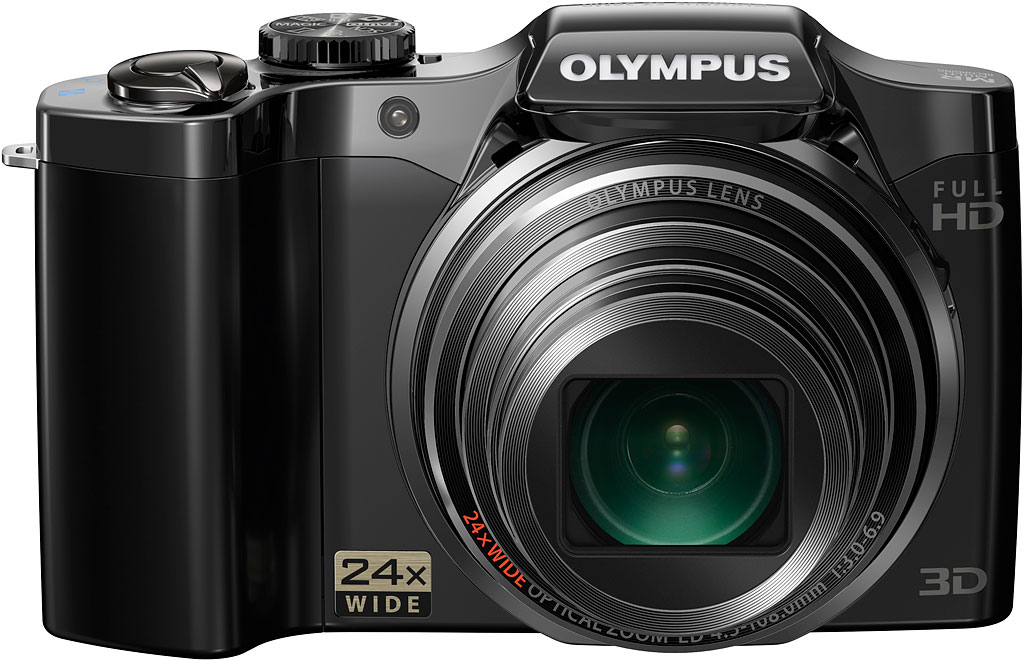
Olympus just unveiled the exciting SZ-30MR superzoom camera, which is the first in the world to support multi-recording. This means you can snap the occasional 16MP photo, even while you are actively recording 1080p video with the camera and you won’t lose any video frames while doing that. Oh, and we also got another rugged compact – the Olympus Tough TG-810.

The Olympus SZ-30MR packs a 24x zoom F/3-6.9 lens that starts at the ultra-wide 24mm and extends all the way to 600mm (in 35mm equivalent). The size of the 16MP sensor hasn’t been confirmed yet, but 1/2.3” seems like a safe bet.

SZ-30MR

The SZ-30MR is doing 1080p videos and also features the innovative 3D shooting mode where you can stitch to photo together into one stereoscopic image. 9fps shooting at full resolution also looks pretty impressive.

The Olympus SZ-30MR comes with a 3” screen with 460K dots. It should hit the shelves next month for an estimated $400.

The other new announcement, the Tough TG-810 is built around a 1/2.3” imager of 14 megapixel resolution. Its 5X F/3.9-5.9 lens covers the 28-140mm range and its 3” screen packs the impressive 920k dots, which is almost as good as the best in the DSLR world.

TG-810

Video recording only goes up to 720p, but rugged camera fans will certainly appreciate the onboard GPS, compass and magnetometer. There’s also in-camera panorama shoot mode and 3D shooting support on the TG-810.

The dustproof, waterproof (up to 10m), shockproof (up to 2m drop) and cold-resistant (up to -10 degrees Celsius) Olympus Tough TG-810 will go on sale next month for $400.

Olympus SZ-30MR
Olympus Tough TG-810

Read more...


Olympus has a thing for superzoom compacts so it’s little wonder that three of their four camera announcements today belong in that category. Today the company lifted the curtain of the DSLR-like SZ-10, packing 18x zoom lens, the ultra-wide angle VR-330 and VR-320 that zoom up to 12.5 times and the affordable VG-110.

The star of the show, the Olympus SZ-10, packs a 1/2.3” 14 MP CCD sensor and f/3.1-4.4 lens that covers the 28 – 504mm range in 35mm equivalent. The SZ-10 3” LCD screen features 460k dots, which is decent for a camera in this class.

Along with that, the Olympus SZ-10 introduces a new 3D mode that allows you to capture stereoscopic images. With no dedicated 3D lens at hand you need to shoot 2 images for the 3D image to be stitched. Fortunately, it’s fully automatic – you take a shot and than slowly pan until the camera automatically takes a second one.


The video recording capabilities of the Olympus SZ-10 max out at 720p, which is somewhat modest as far as current trends go. You still have an HDMI port for sharing those images and videos on your HDTV, though.

The SZ-10 will set you back $250.

The Europe-bound Olympus VR-330 and VR-320 share the sensor of their bigger brother,
but are somewhat more compact. Their 12.5x f/3-5.9 zoom lenses stretches from the ultra-wide 24mm all the way to 300mm. By the way, from where I stand, that really looks like the more convenient zoom range to have.

The differences between this couple boil down to the 3” display resolution (460k dots for VR-330 and 230k dots for VR-320) and the 3D shooting and HDMI port mode, which are only available on the VR-330.


Video recording on both the VR-330 and VR-320 goes only as high as 720p. The VR-330 will only be available through online retailers for £160, while the VR-320 will be an exclusive to Jessops UK online store and will go for £140.

Finally, there’s the Olympus VG-110, which has a retail price of... wait for it… $90. For that you get a 1/2.3” 12 MP sensor, VGA video recording and 4x zoom f/2.9 -6.5 lens (27-108mm). Bargain hunters should definitely check this one.


The Olympus SZ-10 will be available in March, while the other three newly announced compacts should hit the shelves this month.

[Source]

Read more...


Today Canon announced a couple of new additions to their DSLR portfolio. The 600D (or T3i in the US) is an update to the 550D, while the 1100D (T3) is a long due refreshment to the 1000D affordable-priced DSLR.

Canon EOS 600D
Actually the Canon EOS 600D is more of a cosmetic update, packing the same 18 MP APS-C sensor at its heart and a 3” 1040k dot LCD screen with a 3:2 aspect ratio. The 9-point AF has also remained unchanged.

The changes compared to the 550D are only a handful. The screen is now articulated (side-hinged), the 600D has borrowed the latest iFCL Metering system from the 7D featuring a 63-zone Dual-layer metering sensor and there’s now built-in wireless flash control as in the bigger guns – a first for the series.

On the negative side, the 600D viewfinder is smaller than that of the 550D and the proximity sensor for the automatic LCD display toggling on and off has gone missing. Instead users will have to make do with a button (not nearly as user-friendly).

The Canon 600D should start shipping in March for estimated £679.00/€819.00 for the body or $900 for the 18-55 f/3.5-5.6 IS II kit. The lens is a slightly face-lifted version (if you can say that for a lens) of the original stabilized Canon EF-S 18-55mm f/3.5-5.6 IS lens.


Canon EOS 1100D
The EOS 1100D represents a more substantial upgrade, bringing 720p video recording and a new 12MP APS-C sensor to the most affordable DSLR series. The image processor has also been changed to Digic IV and an HDMI port has been added. The Canon 1100D LCD measures 2.7” and packs 230k dots.


The Canon 1100D body will go for £419.00/€499.00 and for £769.00/€929.00 you can get it in a kit with the 18-55 f/3.5-5.6 IS II lens.

Also for the video enthusiasts Canon released the 320EX external flash. This is the company’s first Speedlite model to feature a video light to take low-light video recording to a whole new level.

[Source]

Read more...


Canon opened a bag of point-and-shoot cameras – all 5 of them can record 1080p video with stereo sound but they have other tricks up their sleeves too, things like manual controls, touchscreen, HDMI, GPS, slow-mo videos and so on.

I’d like you to meet the Canon IXUS 310 HS, SX230 HS/SX220 HS, IXUS 220 HS and IXUS 115HS. Sure they are a mouthful in on sentence, but believe me they are worth the attention...

Canon IXUS 310 HS (PowerShot ELPH 500 HS in US)
The top dog of the pack is the Canon IXUS 310 HS. It features an f/2.0 24mm ultra-wide angle lens with 4.4x zoom and a 12MP sensor with DIGIC 4 image processor. This enables the camera to take photos with high shutter speed and improves low-light performance.


Optical stabilization and Handheld Night Scene mode (which takes multiple shots and merges them together) will increase still shot quality even more. There are manual controls for the more skillful photographers.

The Canon IXUS 310 HS can record FullHD@24fps video with stereo sound in the iFrame video format (H.264/AAC). Slow-mo modes are available too – VGA@120fps and QVGA@240fps.

The iFrame format can be directly imported into iMovie ’09 (or later) without the need for transcoding. The IXUS 310 HS also has an HDMI port for direct connection to HDTVs.

The camera also boasts a 3.2” 460K dot touchscreen, which offers a customizable UI and gestures. Smile and face detection is available along with touch AF and tracking AF. One more interesting trick is the Movie Digest function – it automatically records up to 4 seconds of video before a still shot is taken and later joins them in a single VGA movie.

The Canon IXUS 310 HS will go on sale this March.

Canon SX230 HS/SX220 HS
Next up is the SX230 HS/SX220 HS duo – the only difference between the two is that the SX230 packs a GPS receiver for geo-tagging photos and videos (a first for a Canon point-and-shoot). There’s a GPS Logger functionality, which records your journey for viewing in Google Maps or Earth.

The SX230 HS/SX220 HS pack a 12MP sensor with DIGIC 4 processor and 28mm wide-angle lens with 14x optical zoom. Optical stabilization and manual controls are available too.


Just like the previous shooter, the duo can record FullHD@24fps video with stereo sound in the iFrame format and slow-mo videos as well (VGA@120fps, QVGA@240fps). There’s an HDMI port for connection with HDTVs. The Movie Digest feature is here too.

The Canon SX230 HS/SX220 HS feature a 3” 460K dot display with 16:9 aspect ratio. An optional water-proof case – the WP-DC42 – can take the two cameras up to 40 meters underwater.

The Canon SX230 HS/SX220 HS will go on sale March 2011.

Canon IXUS 220 HS (PowerShot ELPH 300 HS)
The Canon IXUS 220 HS continues with the 12MP sensor with DIGIC 4 processor combo, but packs a 24mm ultra-wide angle lens with 5x zoom, all tucked into a thin stainless steel frame – 19.5mm.

The 2.7” 230K dot screen of the 220 HS is covered with tempered glass to improve durability. The camera is also compatible with two water-proof cases – the slim WP-DC320L can dive up to 3 meters and the WP-DC41 can go down up to 40 meters.


The IXUS 220 HS records FullHD@24fps videos with stereo sound and VGA@120fps/QVGA@240fps. An HDMI port is also onboard.

Optical stabilization along with face detection and tracking AF should help with the image quality. Movie Digest mode is available too.

The Canon IXUS 220 HS will be available some time this month.

Canon IXUS 115 HS (PowerShot ELPH 100 HS in US)
At the bottom of the bag is the Canon IXUS 115 HS – but despite its modest model number it actually carries a good deal of features from its bigger siblings – 12MP sensor with 28mm wide-angle lens, 4x zoom and optical stabilization.


The IXUS 115 boasts a compact (20mm thin) metal body and a 3” 230K dot display. It can record FullHD@24fps video and the slow-mo modes are available (VGA@120fps, QVGA@240fps again). Even the mini HDMI port is present.

Face and smile detection are available as is Movie Digest. You can also get one of the two optional water-proof cases – the slim one for up to 3m and the more rugged one for up to 40m.

[Source]

Read more...


Sometimes I think Japan has all the fun – take this new LG phone for example. The LG L-03C packs a 12MP camera (not that uncommon nowadays), with 3x optical zoom (still very uncommon) – but unless you are a NTT DoCoMo user, you’ll probably never enjoy making a call on an LG point-and-shoot camera...

The LG L-03C phone packs a 12MP CCD image sensor and Pentax lens that offers 3x zoom. Are LG and Pentax trying to drum up competition for the Lumix phone (which coincidentally is for NTT as well)? Xenon flash and 720p video recording round off the camera specs.

The screen on the LG L-03C is a 3” WVGA touchscreen and while the phone is fairly compact in terms of height and width (112 x 60 mm) it’s 17.3mm thick on average, which swells up to 22mm in the thickest part.

Don’t expect any smartphone goodness though. And while the LG L-03C does support GSM networks, it’s headed to NTT DoCoMo in Japan (expected to arrive January next year) and there’s not a word on it ever going westward. Shame, as LG doesn’t have a horse in the GSM 12MP camera race yet.


[Source] (Site in Japanese)
Read more...

Most Popular Posts


Follow us on Facebook Follow us on Twitter Follow us on Google Buzz GenCept on Stumbleupon Follow us on Digg Follow us on Youtube Subscribe to ous RSS Feed Subscribe via E-mail
Creative Commons LicenseGenCept by http://GenCept.com is licensed under a Creative Commons Attribution-Noncommercial-Share Alike 3.0 United States License.
Permissions beyond the scope of this license may be available at http://creativecommons.org/about/licenses/.

.